Meet your cross-examiner before you meet them in court.
Most experts never get to rehearse the witness box. CrossCoach starts gently: read a plain-English guide to the science in your discipline, test yourself with quick challenges, then face an AI counsel in private when you’re ready.
The counsel works from the same readings you’ve studied, so nothing comes out of nowhere. Nobody watching. Nothing riding on it. Go again whenever you like.
This is the kind of exchange you work up to.
The AI plays opposing counsel. You answer in your own words, and the questions follow what you say.
You decide when to try one — no clock, no audience. Afterwards, the evaluator marks up the transcript.
Can you tell the court your conclusion?
Yes. In my opinion the latent print was made by the same finger as the exemplar.
And on what basis is that conclusion defensible, given that the sufficiency judgment in latent print examination is subjective?
I rely on the comparison protocol I applied — Level 2 minutiae and selective Level 3 detail, evaluated against the AAAS 2017 guidance. The judgment is a conclusion of correspondence, not a probability statement.
Are you familiar with the Ulery et al. 2011 false-positive rate of 0.1%?
Yes.
So you accept that a one-in-a-thousand error is possible in your own work?
Start with the reading. Try a session when you feel like it.
Read the science
Start with a plain-English guide to the evidence in your discipline — what it can show, where it is shaky, and how it has held up in court.
Test yourself
Quick challenges run through each reading. Try an answer in your own words and get directed, source-grounded feedback. No session required.
Face counsel, when you’re ready
Feel like a challenge? An AI opposing counsel asks questions in real time, working from the same readings — so nothing comes out of nowhere.
See how you did
A separate evaluator reads the transcript back and points out what landed and what to tighten, turn by turn. In private, as often as you like.
Five dimensions of credible expert testimony.
These are the dimensions CrossCoach’s evaluator actually scores, and they map directly onto what courts look for in expert evidence, so the feedback is about the things that genuinely matter on the stand.
Read the research behind it →Scientific foundation
Can you defend the validity of the method you used, with appropriate reference to the evidence base?
Expression of uncertainty
Do you quantify or qualify your conclusions accurately, or overclaim?
Independence & bias management
Are you transparent about the context you had, and how you managed its influence?
Match vs identification
Do you distinguish a reported correspondence from a claim about its source?
Transparency & communication
Are you clear, willing to acknowledge limits, and free of jargon-shielding?
The research in your field, in plain English.
Twelve readings across every live discipline. Each distils the key research — what a method can show, where it’s contested, how it has held up in court — into a short, plain-English walk-through with quick challenges built in. It’s the same material the counsel later draws on, so your reading and your practice stay in step.

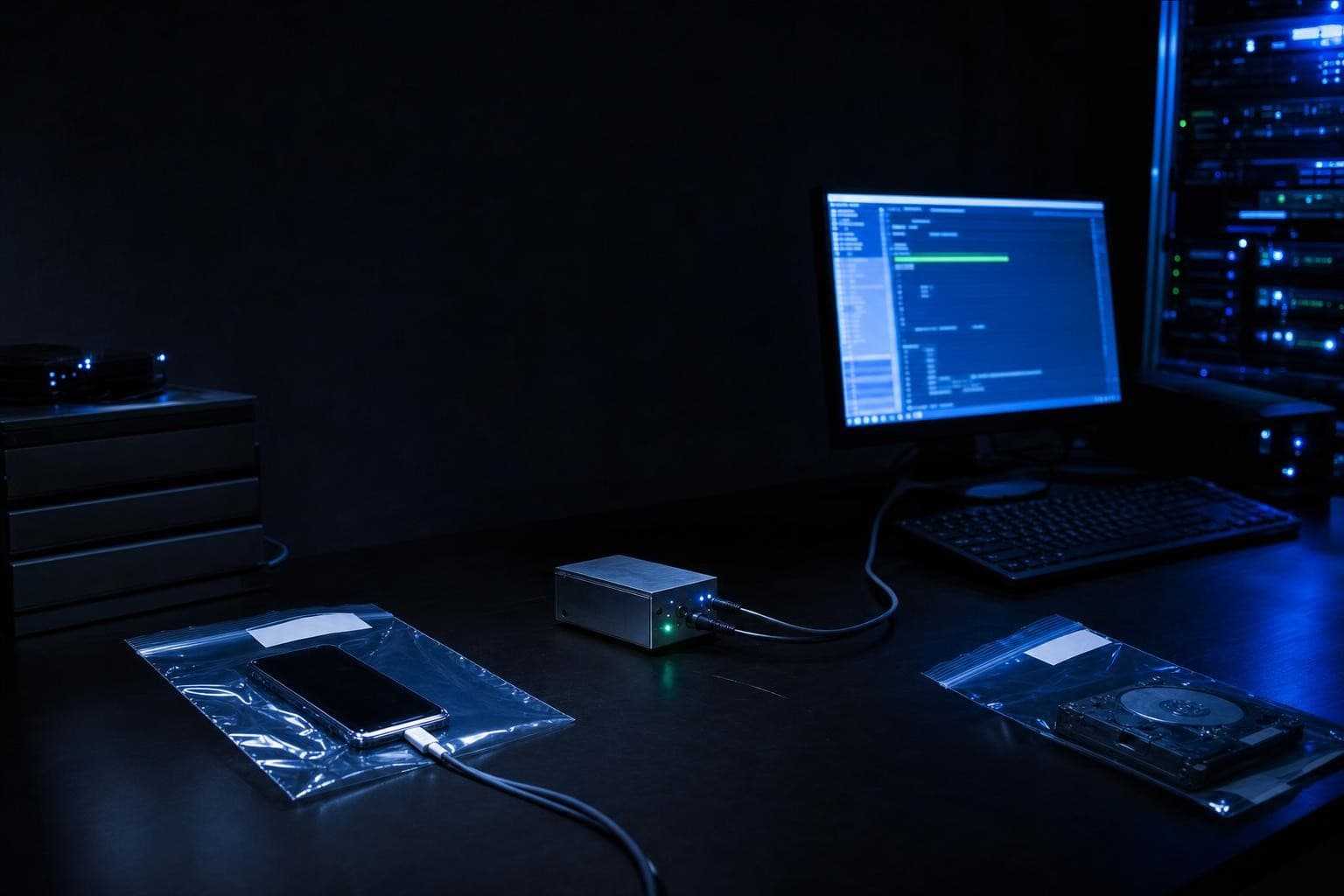
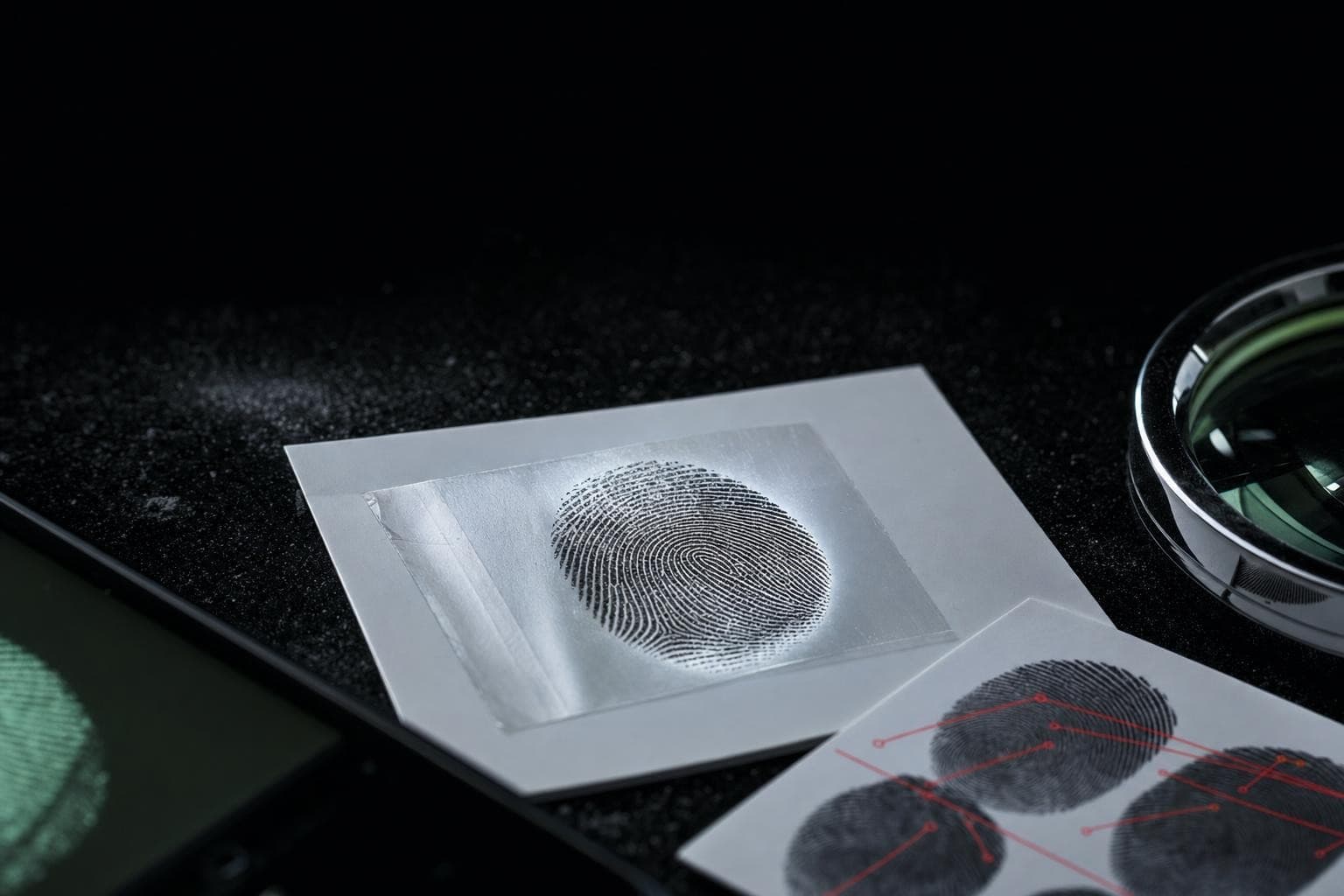

Built for forensic science, and for any field whose conclusions get questioned in court.
Latent fingerprint examination
Print quality, feature levels, complications, conclusion type. AAAS 2017, PCAST, Ulery, Hicklin.
Crime scene reconstruction
Scene type, contributing disciplines, conclusion type, context exposure. Chisum & Turvey, NAS.
Firearms, ballistics & gunshot residue
Cartridge and bullet identification, toolmarks, wound ballistics, gunshot residue and transfer. AFTE, Ames I & II, PCAST.
Digital forensics
Tool validation, extraction completeness, user attribution, timelines, deleted data. Horsman, Sunde & Dror, NIST.
Facial comparison from images
Image quality, morphological method, face-recognition leads, examiner testing, verbal scales. Jenkins, White, OSAC.
Forensic voice comparison
Method validation, likelihood ratios, calibration, relevant population, synthetic speech. Morrison, Enzinger, NAS.
Gait, body & clothing comparison
Gait, build, clothing and height from footage; frame rate, reproducibility, verbal conclusions. Birch, Alberink & Bolck.
Image & video authentication
Manipulation and deepfake detection, sensor fingerprints, provenance, benchmark versus casework error rates. Fridrich, C2PA, Interpol.
DNA evidence & mixtures
Single-source and mixture interpretation, contributor counting, probabilistic genotyping and its sealed source code, transfer and activity level, the error rate behind the match. Evett, PCAST, ISFG.
Bite-mark comparison
Skin as a substrate, the uniqueness assumption, examiner agreement, and the exonerations. ABFO, the Texas moratorium, PCAST.
Microscopic hair comparison
Class characteristics versus individualisation, mtDNA supersession, and the FBI review’s finding of flawed testimony in most cases examined.
Footwear & tyre impressions
Class versus identifying characteristics, randomly acquired marks, wear, and the missing black-box study. PCAST, SWGTREAD.
Questioned documents & handwriting
Handwriting and signature comparison, forgery, examiner-versus-layperson performance, and the limits of individualisation. NAS, Kam.
Fire & arson investigation
Origin and cause, the negative corpus, discredited burn indicators, and the wrongful convictions. NFPA 921, Willingham, Lentini.
Forensic pathology
Cause and manner of death, the shaken-baby debate, asphyxia, and the subjectivity of the call. NAS, the abusive-head-trauma literature.
Seized-drug chemistry
Presumptive versus confirmatory testing, quantitation, and laboratory integrity. Dookhan, Farak, GC-MS.
Forensic toxicology
Blood-alcohol and drug interpretation, postmortem redistribution, and reading too much into a concentration.
Trace evidence
Glass, paint and fibre comparison — where the science is strong, and where it is only class-level. ASTM, Interpol.
Eyewitness identification
System and estimator variables, confidence and accuracy, lineup procedure, and the leading cause of wrongful conviction. Wells, NAS.
You already know the science. This is practice at saying it well.
An expert’s knowledge rarely fails on the stand. What can wobble is the articulation of it: explaining a method in plain words, owning its limits, keeping a line of reasoning steady while it’s questioned.
That’s a skill, and skills grow with practice and feedback. But a real cross-examination might come once or twice a year — not nearly enough to get comfortable with it.
CrossCoach gives you the practice: read at your own pace, try a session when you feel like it, and get useful feedback each time. In private, for as long as it takes to feel at ease.
Every question traces back to a source you can open.
Everything the readings teach, and everything counsel asks, is drawn from a curated library of reports, studies, standards, legislation and case law for your discipline.
Competence gets you to court. Composure gets you through it.
First structured pilots with Australian police agencies begin late 2026. Access is by invitation during the pilot programme.
Sessions run about ten minutes. Readings and challenges are open to everyone now.hello@crosscoach.ai · CrossCoach™ · Brisbane